



Calming Corner Ideas for Children
If you’ve ever wished for a small, soothing space where children can reset, breathe, and find calm, a calming corner might be exactly what you need! Whether you’re a teacher designing a mindful classroom or a parent creating a cosy nook at home, calming corners offer a gentle way for kids to manage emotions, practise mindfulness, and build emotional awareness.
Below, I’ll share simple tips and ideas for setting up a calming corner that fits beautifully into both classrooms and home play areas.
1. Choose a Quiet, Low-Stimulation Spot
Pick a calm area away from noise and distractions – a corner near natural light or a soft rug works perfectly. In classrooms, it might be near your reading corner; at home, it could be a quiet space beside a bookshelf or in a child’s bedroom.
2. Use Gentle Colours and Natural Themes
Soft pastel tones, ocean blues, or sandy neutrals create a sense of calm. Add natural textures and some child friendly plants to create a soothing area.
3. Add Visual Supports for Emotional Regulation
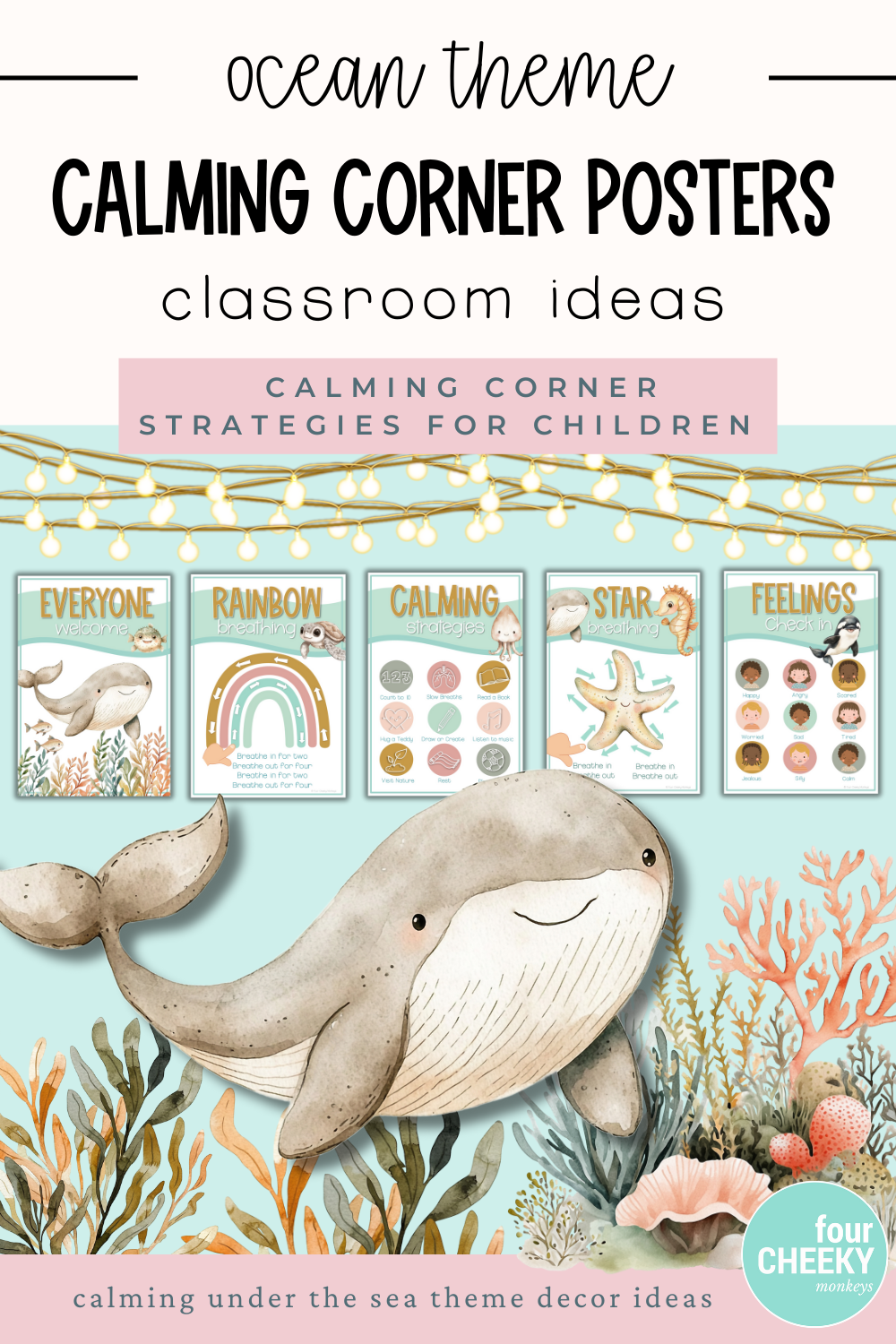
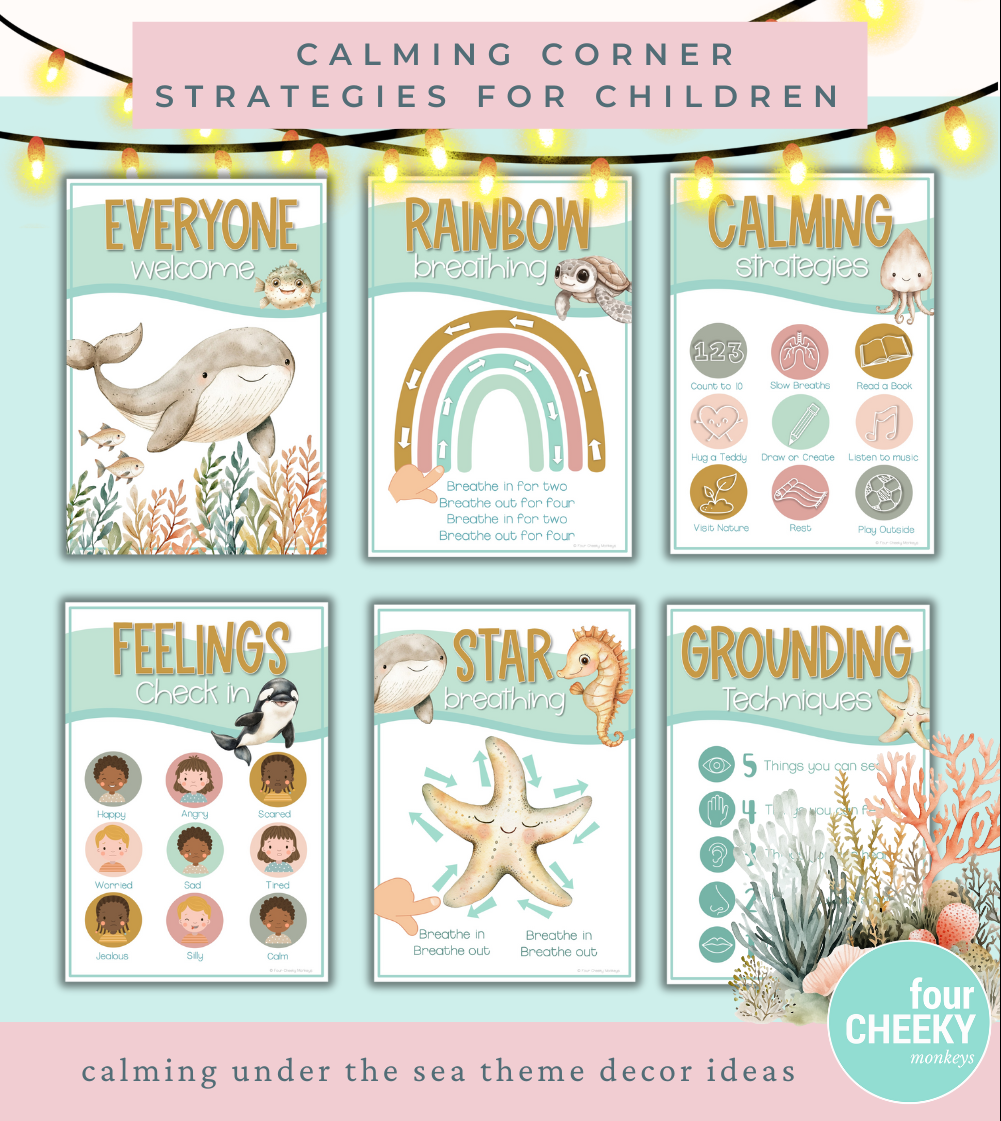
Include visuals that teach strategies such as deep breathing, grounding, or feelings check-ins. Children often respond well to friendly, illustrated reminders. The posters in my Ocean Calming Corner Set includes “Rainbow Breathing,” “Grounding Techniques,” and “Feelings Check-In” charts that help guide calm down routines in a simple, age appropriate way.
4. Include Comfort Items
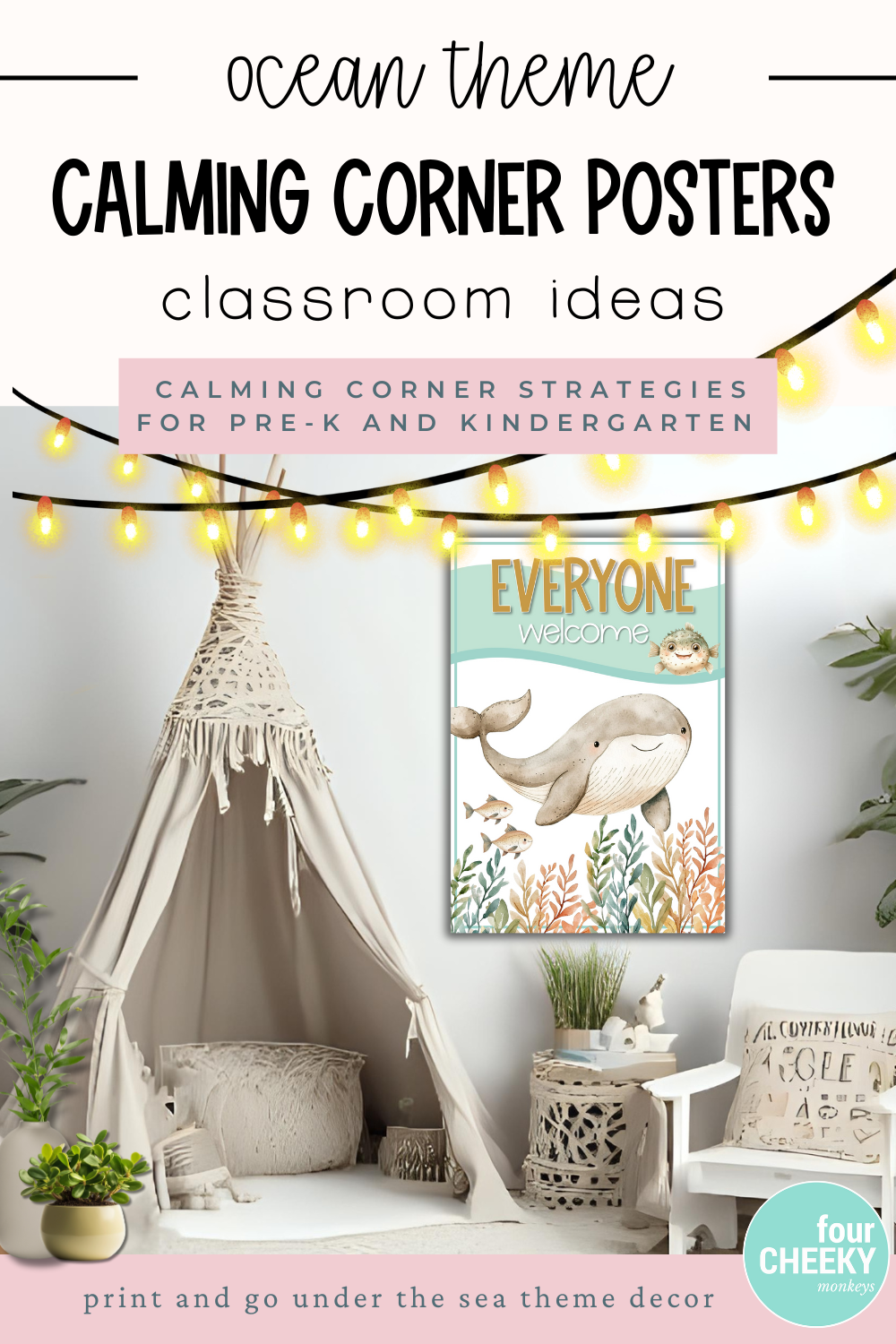
Soft cushions, a small soft toy, or a cosy blanket can make the space feel safe and inviting. If you’re a teacher, consider a soft floor mat or bean bag that’s easy to clean and move. A neutral play tent also makes a wonderful safe space for children as it can help to block out visual stimulation and noise to calm the mind.
5. Add Sensory or Mindfulness Tools
You might include a calm jar, fidget toy, small sand timer, or a mirror for self-reflection. These tools support self regulation and help children focus on sensory input when big emotions feel overwhelming.
6. Keep it Positive and Accessible
Use affirmations, gentle lighting, and easy to reach materials. For younger children, visual cue cards or posters help them independently use the space without needing verbal instructions.
7. Refresh the Space Seasonally
You can swap out a few posters or colours as themes change through the year – for example, pastel ocean tones for summer, woodland hues for autumn, or pastel space themed colours for a playful mid-year refresh.
8. Model Calm and Use It Together
Children learn from what they see. Whether you are at home or at school, explicitly teach your child how to use the area and regulate their emotions. Talking about your own feelings, modelling breath taking techniques or sitting quietly in the calming corner together helps normalise emotional regulation for everyone.
A calming corner doesn’t need to be complicated, just intentional. Whether it’s tucked away into a busy classroom or nestled in your home, it’s about creating a peaceful environment that helps children feel seen, safe, heard and supported.
If you’d like ready-made visuals that match this gentle ocean aesthetic, my Ocean Theme Calming Corner Posters include breathing, grounding, and emotion check-in charts designed for both teachers and parents to use with ease.